Understanding surface structure
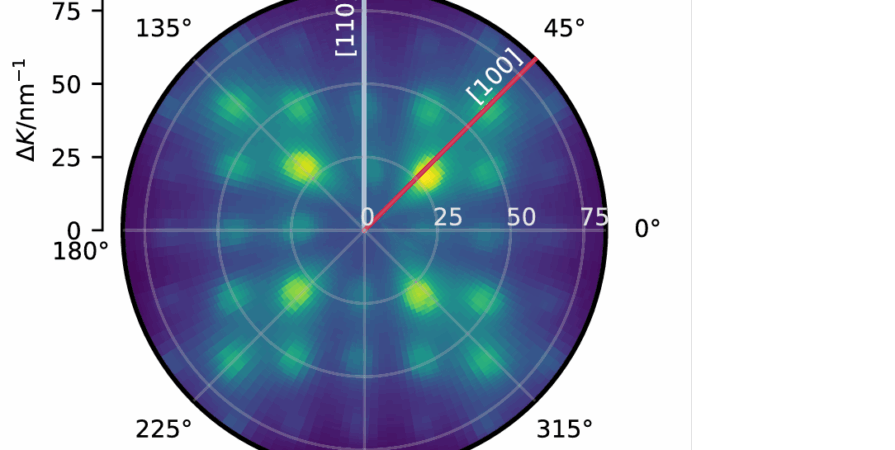
Miniaturized Surface Diffraction from helium
Researchers have successfully adapted helium scattering, an ultra-gentle, surface-only measurement technique, to work on a microscopic scale.
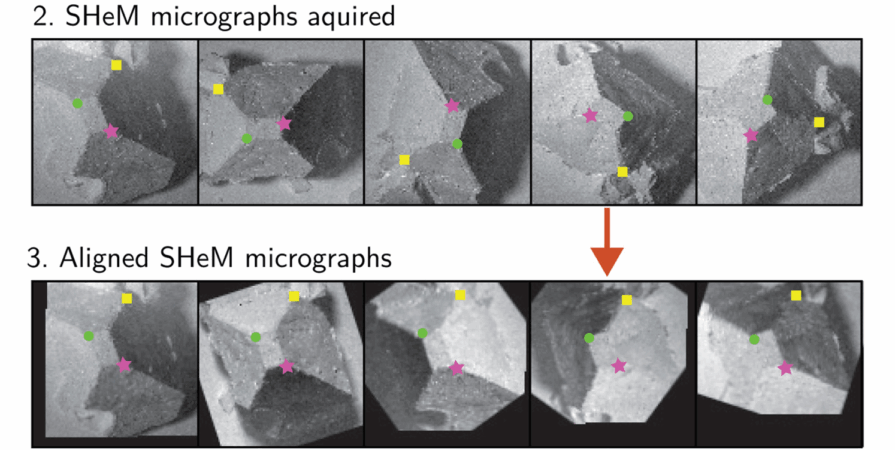
3D Maps of Delicate Surfaces Acquired by Helium Atoms
Scientists have developed "heliometric stereo," a new technique that creates quantitative 3D maps using a scanning helium microscope.
Probing surface dynamics

It takes some heat to form ice
A new study from the University of Cambridge, in collaboration with the University of Surrey and Graz University of Technology (Austria), reveals that energy is needed for water to proceed through the first step of ice formation on graphene.

Following atoms in real time
Using an advanced technique called Helium Spin Echo (HeSE), researchers have measured the movement of oxygen atoms on a ruthenium metal surface at picosecond time scale
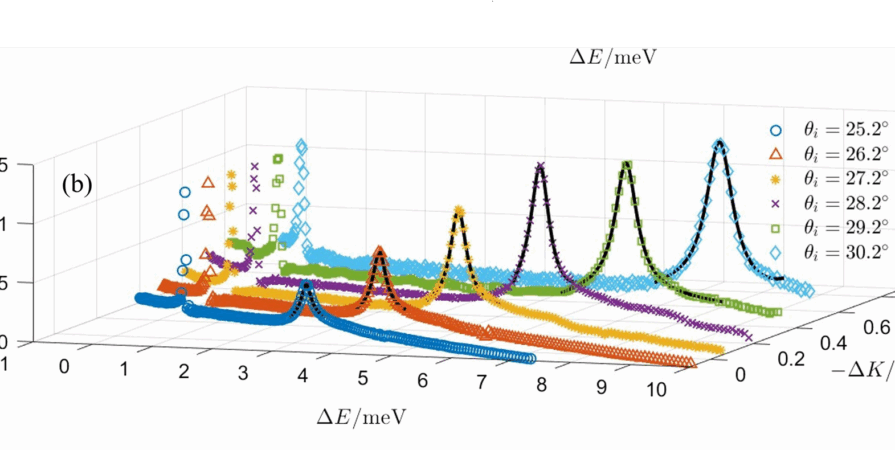
Directly Measuring How Surface Defects Affect Phonon Propagation
For the first time, researchers have directly measured how much “lifetime shortening” acoustic phonons (the primary carriers of heat) are influenced by surface defects.
Instruments
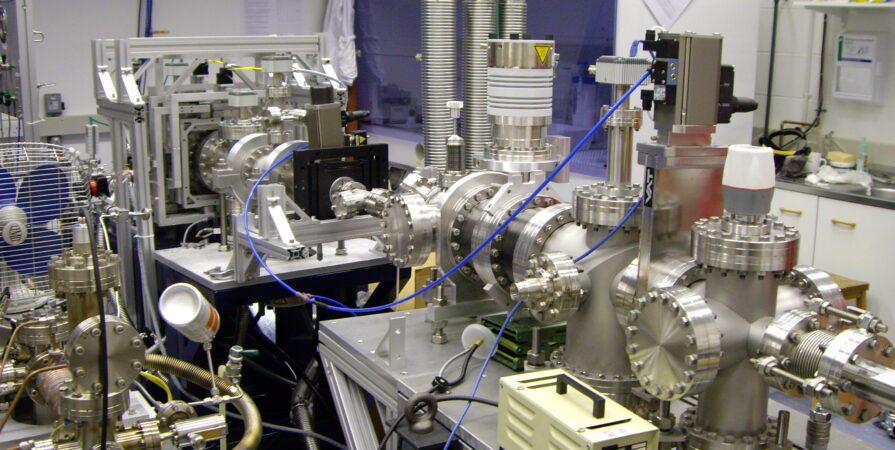
Scanning helium microscopy
The scanning helium microscope forms images using neutral helium atoms reflected from a surface. Because helium atoms carry no charge and very little energy, SHeM can image fragile or insulating materials without damage.
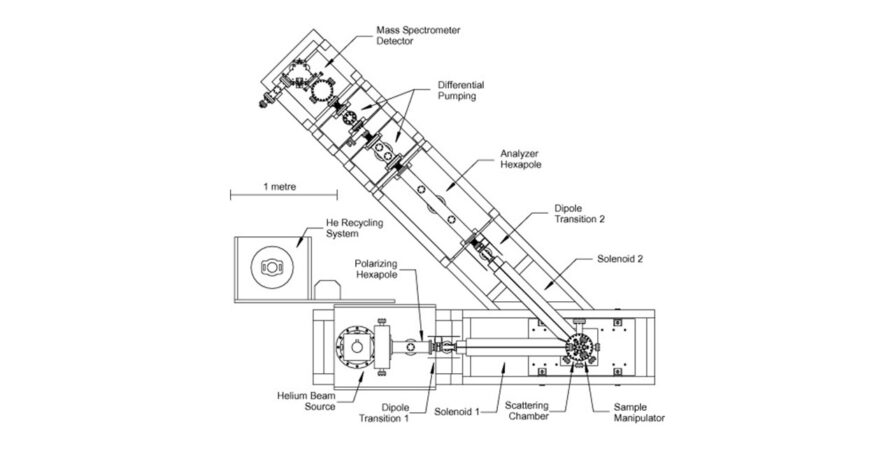
Helium spin echo
Helium spin echo spectroscopy measures atomic-scale surface dynamics with picosecond time resolution. By encoding the helium-3 atoms’ spin precession before and after scattering, it directly probes phonons, adsorbate diffusion, bound state resonances, etc.
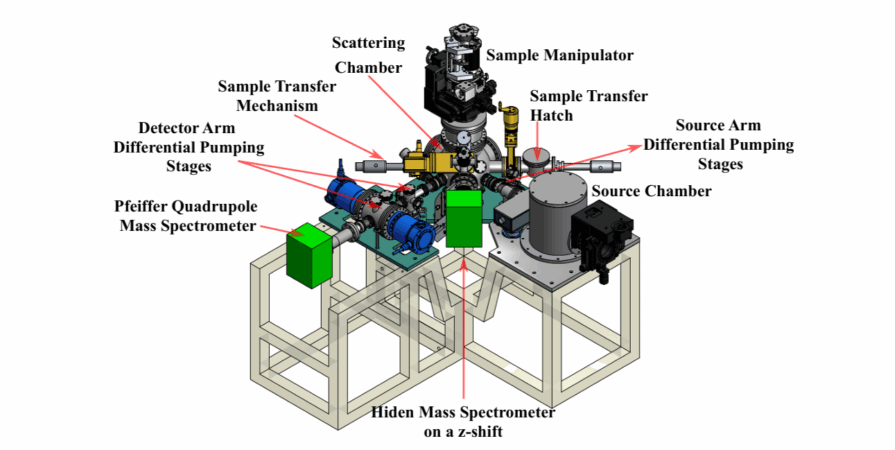
Miniscat
Miniscat is a compact helium atom diffractometer designed to study surface order and structure. By measuring diffraction patterns of neutral helium beams, it reveals atomic-scale periodicity and adsorbate arrangements non-destructively.